

Pipe Strain: The Most Misunderstood Pump Installation Problem
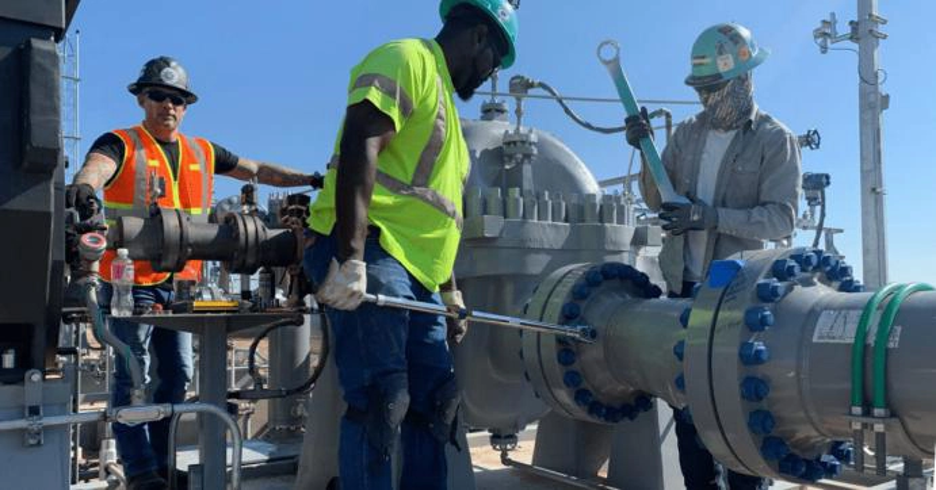
A pump can leave the factory properly assembled, tested, and aligned, then develop problems once the piping is connected in the field. Pipe strain is often the reason. If the piping flanges do not meet the pump flanges in the correct position, tightening the bolts can place enough force on the pump to distort the casing and change shaft alignment.
What is Pipe Strain?
Pipe strain is the force transferred to a pump when connected piping must be pulled, pushed, lifted, or twisted into place. The piping may appear close enough before the bolts are installed. Once the flanges are tightened, however, that force has to go somewhere.
A pump casing is rigid, but it is not immune to external loading. Forced pump pipe connections can distort the casing, shift the shaft position, and change the alignment between the pump and driver. On larger pumps, very small flange errors can create more movement than expected.
The basic field rule is simple: the piping flange should meet the pump flange without using the flange bolts to bring the two together.
Three Flange Alignment Problems That Create Pipe Strain
Pipe strain usually begins with one or more forms of flange misalignment: axial, parallel, or angular.
Axial Misalignment
Axial misalignment means there is a gap between the faces of the pump flange and piping flange. The piping is too short, too long, or not positioned correctly along the pipe axis.
This is generally the most forgiving of the three conditions, but it still has to stay within the applicable installation tolerance. Pulling a pipe lengthwise into place with flange bolts applies a continuous load to the pump nozzle.
Parallel Misalignment
Parallel misalignment occurs when the two flange faces are parallel but their centerlines do not match. One flange may be higher, lower, or shifted to one side.
A useful field check is to confirm that the flange bolts can pass through the holes without moving either flange. If workers have to pry the piping sideways or force bolts through the holes, the connection is not properly aligned.
Angular Misalignment
Angular misalignment means the flange faces are not parallel. The gap may be wider at the top than the bottom or wider on one side.
This condition generally creates the highest internal stress. Tightening the flange bolts applies a twisting force to the pump nozzle. That torsional load will work through the casing and alter the shaft position.
Angular error can be hard to see without measuring it. Two flanges may appear lined up while still being several thousandths of an inch outside the permitted tolerance.
Why Small Piping Errors Affect the Pump
Pump and driver alignment is measured in thousandths of an inch. The piping connection has to be treated with the same degree of care.
When misaligned piping is bolted to the pump, possible results are…
- A change in pump-to-driver alignment
- Casing distortion
- Altered internal clearances
- Increased bearing or seal loading
- Vibration
- Premature coupling, seal, or bearing wear
These symptoms are sometimes blamed on the pump or the original shop alignment. If they appear after pump piping is connected, pipe strain should be checked before making repeated alignment corrections.
Realigning the motor while the casing remains under piping load does not correct the source of the problem.
How Pipe Strain is Checked During Installation
Flange alignment should be inspected before installing the gasket and tightening the bolts. The piping also needs to be independently supported. A pump nozzle is not intended to support the weight of a pipe system.
For angular alignment, technicians can use feeler gauges to measure the flange-face gap at several points around the circumference. PumpWorks field training uses a maximum flange-face variation of 0.001 inch per inch of measured flange diameter. Under that criterion, a flange measuring 10 inches across would allow up to 0.010 inch of variation.
Dial indicators can then be placed on the pump shaft or coupling hub while the piping connection is bolted together. Movement at the indicator shows that the piping is transferring force into the pump. PumpWorks training uses a maximum shaft movement of 0.002 inch for this check. Final acceptance limits should follow the applicable project specifications, equipment instructions, and API 686 requirements.
It is worth checking the indicators throughout bolt-up, not only after every bolt is tight. That makes it easier to identify when and where movement begins. Tighten bolts in a star (crisscross) pattern and snug to 10% of final torque value, then to 30%, then to 100% of the pump manufacturer’s published values. Verify and record the actual final torque values.
Why Prefabricated Pump Piping Causes Problems
One common field problem starts before the pump arrives. The piping contractor fabricates the full pipe run and welds the final flange based on drawings or expected equipment dimensions. The pump is then installed, and the two flanges do not meet within tolerance.
Even accurate drawings cannot account for every field condition. Foundation position, grout, baseplate placement, pipe supports, fabrication tolerances, operating temperature and weld movement can all affect the final flange location.
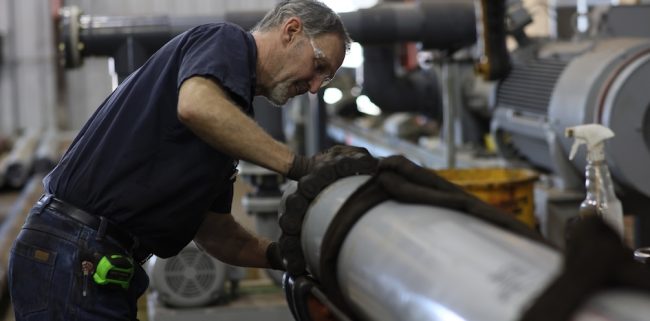
The better practice is to set, level, grout, and align the pump before completing the last piping connection. The final pipe section can then be fitted to the actual pump location. This reduces the chance that the piping will need to be forced into position or cut apart and reworked.
Do Not Use the Pump to Correct the Pipe
Pipe strain is an installation problem, but its effects often appear as a pump reliability problem. A pump piping connection that requires force during assembly is already giving the installation team a warning.
Check the flange gap, bolt-hole position, piping support, and shaft movement before accepting the installation. Correct the piping if it changes the pump alignment. Do not use the flange bolts or the pump casing to correct a fabrication error.
Get Pump Installation Support from PumpWorks
PumpWorks supports pump projects through engineering, manufacturing, packaging, testing, and field installation. Contact PumpWorks to discuss installation requirements, field alignment, or a pump application today.