

Why Pump Performance Predictions Don’t Always Match Real-World Results
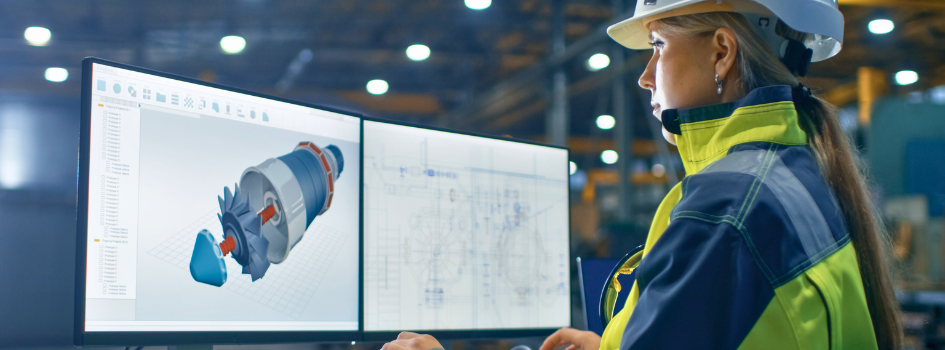
Customers sometimes ask why a new pump doesn’t perform exactly the way the first hydraulic calculations predicted. The simple answer is that those calculations are only the starting point.
Before a pump ever reaches production, engineers spend a lot of time checking that it will actually perform the way they expect. That means simulation, design revisions, manufacturing reviews, and eventually testing. Every step answers the same question: Does the pump still perform the way it was intended to?
The First Design is Rarely the Final Design
Every pump starts with a required flow, head, efficiency target, and operating conditions. Engineers use those requirements to develop an initial hydraulic design. That first design usually changes.
Even when reverse engineering an existing pump, published performance data does not always match the internal geometry inside the pump. Sometimes the differences are small. Other times they are large enough that the hydraulic design has to be revised before work can continue. That is normal. Pump development usually involves multiple design cycles before the hydraulic design is ready for production.
Validation is Where the Engineering Happens
Every pump starts with hydraulic calculations, but those calculations still have to be verified. Small changes to vane geometry, passage shape, or clearances can affect:
- Flow distribution
- Pressure generation
- Hydraulic efficiency
- Internal recirculation
- Cavitation behavior
- Radial hydraulic forces
Those are all things engineers would rather find during the design phase than after a pump has been manufactured.
That’s why the design process is iterative. Engineers run simulations, review the results, revise the geometry, and repeat the process. Sometimes one change solves a problem but creates another. That’s part of hydraulic development.
One CFD Analysis Usually Isn’t Enough
Computational Fluid Dynamics (CFD) allows engineers to simulate fluid flow before manufacturing begins. However, one simulation rarely answers every question.
On one PumpWorks project, engineers divided the hydraulic model into five separate sections. Each section was analyzed at multiple operating points, resulting in more than 35 CFD runs for the initial validation alone. Most projects require additional design iterations, which means even more simulations. Individual CFD runs can take one to two days to complete.
Most of the engineering work happens long before manufacturing starts.
Hydraulic Design Has to Fit Mechanical Design
Eventually the hydraulic design has to become a real pump. Once the hydraulic design is established, engineers also have to account for the mechanical side of the pump, including:
- Pressure containment
- Structural strength
- Corrosion allowance
- Casting requirements
- Machining access
- Assembly clearances
- Maintenance considerations
Meeting those mechanical requirements sometimes means changing the hydraulic passages. A passage may have to move to create clearance for another component. Wall thicknesses may change to improve casting or machining. Even small changes like those can affect hydraulic performance.
That’s why hydraulic and mechanical engineers work through the design together. Both sides continue changing until the pump satisfies hydraulic and mechanical requirements.
Manufacturing Changes the Design Process
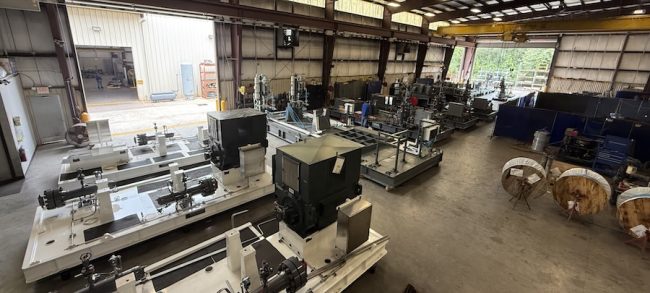
The computer model is only part of the job. The design also has to work in the real world, and manufacturing introduces constraints that engineers have to account for from the beginning.
Castings shrink as they cool. Patterns require draft angles so they can be removed from the mold, and internal passages have to be cast, cleaned, and machined. Every one of those steps introduces tolerances that can affect the final geometry.
That’s why engineers think about manufacturing while they’re still developing the hydraulic design. It’s much easier to account for those constraints early than to redesign parts after the pump has already been built.
Testing is the Final Step
Before a pump leaves the factory, engineers have to confirm that the finished pump performs the way the design predicted. Performance testing shows how closely the finished pump matches the intended operating conditions. If testing finds a problem, engineers revise the design and test the pump again.
That is worth remembering when reading a pump performance chart. The curve is not simply the output of a computer model. It reflects hydraulic design, design revisions, manufacturing, and factory testing.
If you’d like to learn how to interpret those charts, read our related article, How to Read a Pump Curve.
Need Help Evaluating Pump Performance?
If you are replacing an existing industrial pump, developing a custom design, or trying to determine why field performance differs from expectations, the engineers at PumpWorks can help. Contact our team to discuss your application and learn more about our engineering, manufacturing, and pump testing capabilities.